
Everything you need to know about Turkish cuisine in one place — from Mezze (Turkish appetizers) and Mangal (Turkish charcoal grill) to Baklava (Turkish sweet pastry) and Turkish coffee. A complete guide to the flavors of Anatolia with links to key dishes.
Turkish cuisine is one of the three great culinary traditions of the world — alongside French and Chinese — featured in every major gastronomic ranking. It blends Byzantine, Persian, Arabic, Balkan, and Caucasian influences into a cohesive tradition whose beating heart is a shared table, fresh ingredients, and fire. In this guide, we explain everything you need to know about Turkish food gdansk — from breakfast to dessert — with links to more detailed articles for each dish.
Where Does Turkish Cuisine Come From?
Turkey lies at the crossroads of three continents — Europe, Asia, and Africa — and this is beautifully reflected on the plate. Turkish cuisine has evolved over more than 1,000 years: from the nomadic Central Asian tribes and the Seljuk Empire to the multicultural Ottoman palace cuisine, where the Sultan’s palace in Istanbul (Topkapı) employed thousands of chefs from every province of the empire.
Ottoman heritage remains the core of Turkish cuisine today: Baklava (Turkish sweet pastry) traveled from Damascus, Turkish coffee from Yemen, yogurt from Central Asia, and the art of the Mangal (Turkish charcoal grill) has deep roots in the steppes of Anatolia.
Main Categories of Turkish Dishes
A Turkish menu is not structured in the typical Western style of soup, main course, and dessert. Instead, it is organized around styles of dining: Mezze (Turkish appetizers) for sharing, charcoal-grilled dishes, stone-baked specialties, pastries, sweets, and traditional beverages.
1. Mezze — The Art of Sharing the Table
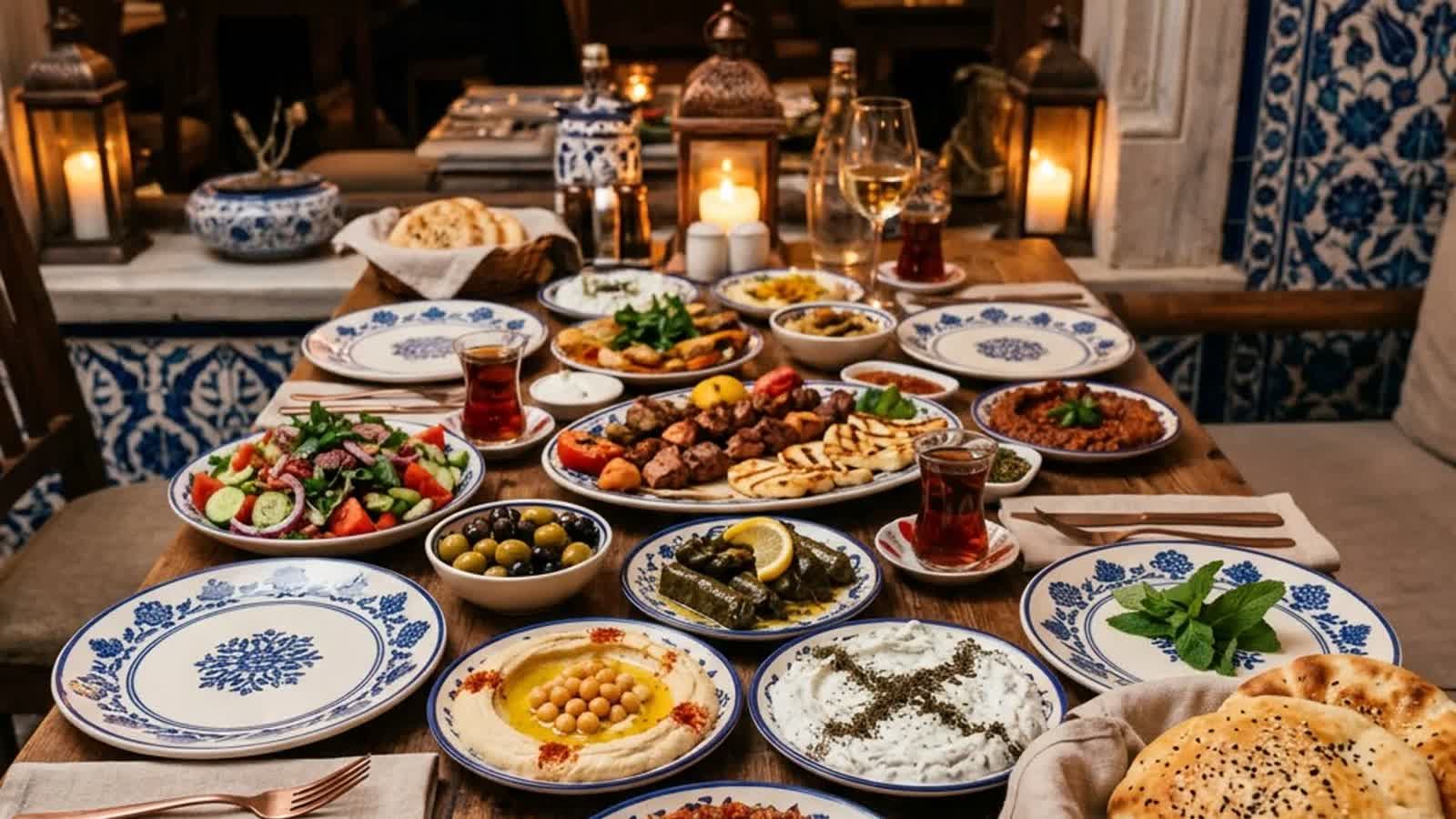
Mezze (Turkish appetizers) are small dishes served together in the center of the table. Everyone reaches, samples, and shares. It is not just an appetizer — it is a dining philosophy. Classics include hummus (creamy chickpea puree), ezme (spicy tomato and pepper salsa), haydari (thick yogurt with mint and garlic), baba ghanoush (roasted eggplant dip), and dolma (stuffed grape leaves).
We wrote more about the traditional Turkish mezze in a dedicated article: Mezze — The Art of Sharing the Table the Turkish Way.
2. Mangal — The Turkish Charcoal Grill
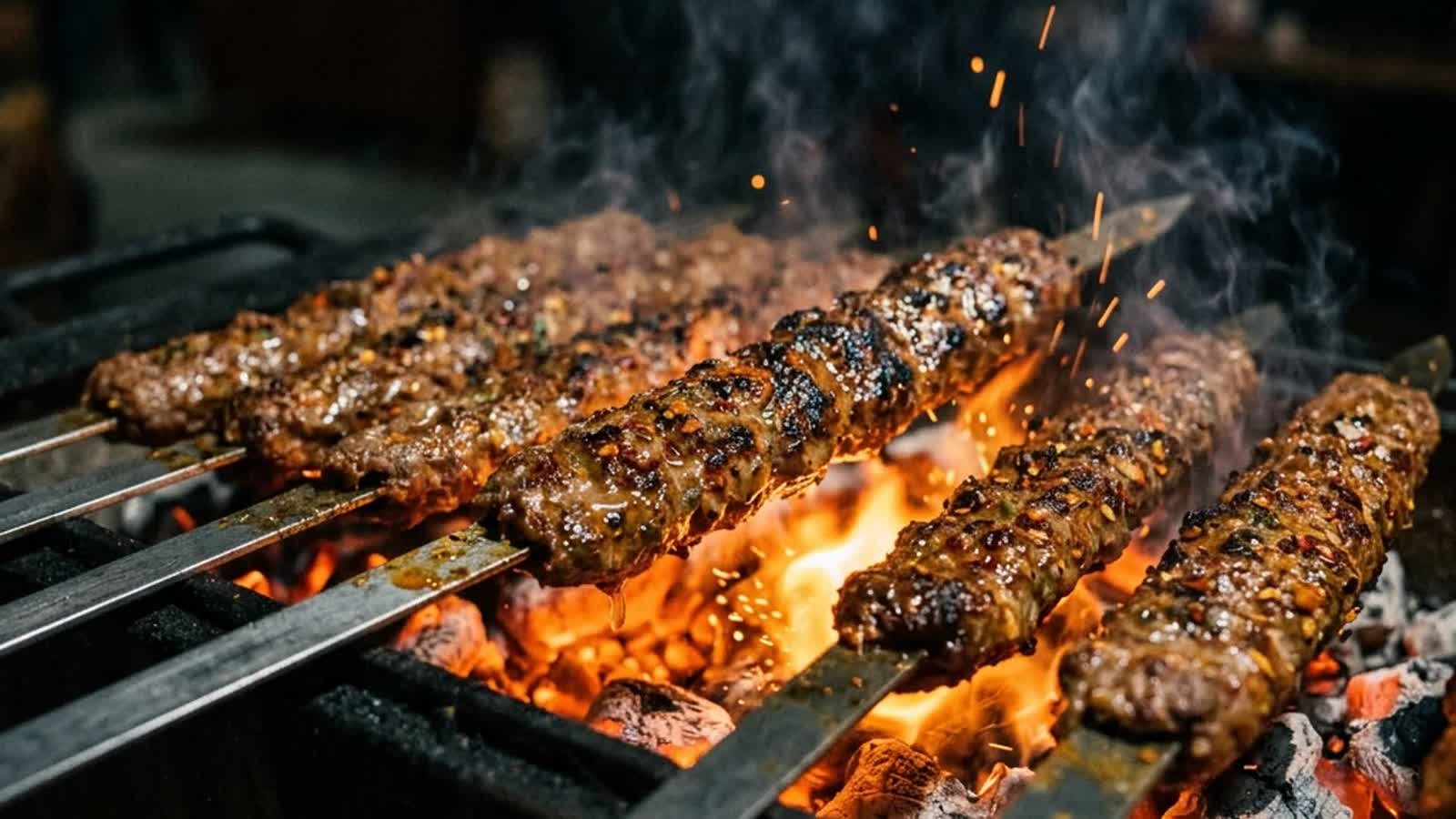
The Mangal (Turkish charcoal grill) is no ordinary grill. It is a narrow, long charcoal hearth where the grillmaster manages the metal Şiş (skewered meat) by hand, controlling every inch of the heat. All the great Turkish kebabs come from the Mangal:
- Adana Kebab — a spicy skewer of hand-chopped lamb blended with red bell peppers,
- Urfa Kebab — the milder brother of Adana, prepared without spicy pepper,
- Kuzu Şiş — tender chunks of lamb marinated in yogurt and garlic,
- Tavuk Şiş — succulent chicken cubes marinated in yogurt and sweet pepper paste,
- Kasap Köfte — seasoned butcher-style meatballs made of ground lamb with onions and cumin.
What is a real kebab gdansk — and why is the typical street corner wrap not it? We explain this in the article What is a Real Kebab? (Hint: It’s Not Fast Food). To read about the charcoal-grilling technique itself, check out: Mangal — The Ancient Turkish Art of Charcoal Grilling.
3. Breads and Pastries — Pide, Lahmacun, Börek
Turkish cuisine has a deep love for baking. Lahmacun (Turkish flatbread) is a paper-thin, crispy flatbread topped with finely minced lamb, tomatoes, and spices — often dubbed "Turkish pizza," though that is a myth. We wrote about it here. Pide (boat-shaped flatbread) consists of light, boat-shaped bread boats filled with cheese, egg, minced meat, or spinach — read more in our guide to Pide.
4. Turkish Breakfast (Kahvaltı) — The Ultimate Meal of the Day
Kahvaltı (Turkish breakfast) is a true ritual. The table overflows with cheeses, olives, eggs, jams, honey, fresh bread, cucumbers, tomatoes, and an endless double-pot of hot Çay (Turkish tea). We also regularly serve menemen — eggs scrambled with peppers and tomatoes. We have described the full ritual in our article on Turkish breakfast.
5. Sweets and Desserts — Baklava, Künefe, Sütlaç
Turkish sweets are among the oldest in the world. Baklava (Turkish sweet pastry) with honey and pistachios, Künefe (sweet cheese pastry) featuring melting cheese encased in crispy shredded pastry, and Sütlaç (Turkish rice pudding) — a delicate baked rice pudding. These are desserts that perfectly conclude a meal and open up a long evening of conversation around the table.
6. Beverages — Çay, Ayran, Turkish Coffee
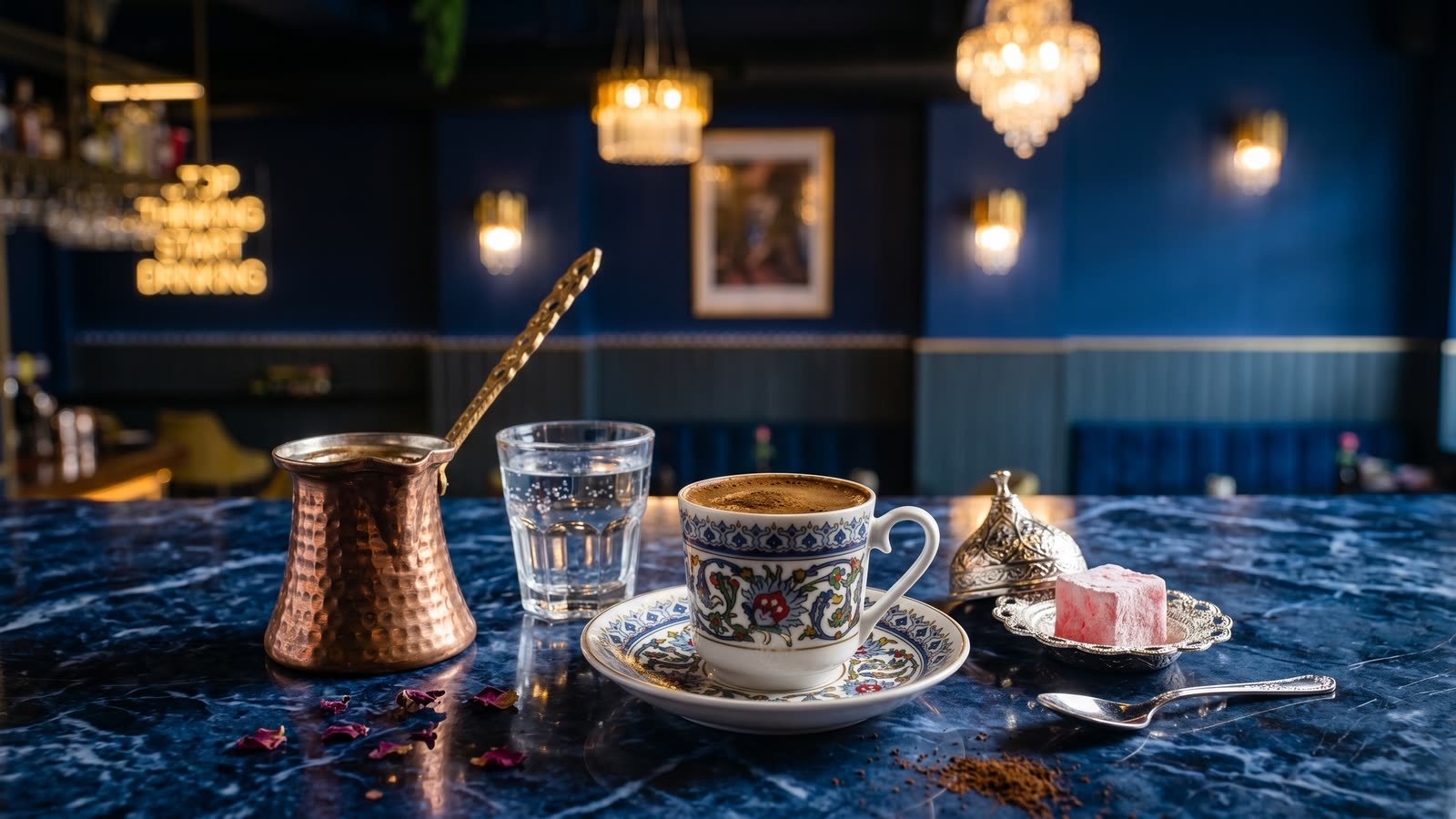
The three main pillars of Turkish beverages are: Çay (Turkish tea) served in elegant tulip-shaped glasses, Ayran (salted yogurt drink) — the absolute best companion for a savory kebab, and Turkish coffee — rich, dense, brewed in a traditional copper Cezve (Turkish coffee pot), and inscribed by UNESCO.
A Turkish meal is not just a sequence of plates. It is an entire evening that begins with Mezze (Turkish appetizers) and ends at midnight over a tulip glass of Çay (Turkish tea).
What Distinguishes Turkish Cuisine from Greek, Lebanese, and Arabic?
These cuisines share many ingredients — olive oil, yogurt, chickpeas, and cumin. The differences lie in the cooking techniques and flavor profiles. Turkish cuisine emphasizes the Mangal (Turkish charcoal grill) and lamb; Lebanese focuses on fresh herbs and tahini; Greek features olive oil and feta cheese; and Levantine Arabic cuisine highlights spiced rice and sumak. However, they all stem from the same rich Mediterranean and Middle Eastern roots.
Turkish Cuisine and Halal
In Turkey, halal is the norm, not a niche — pork is simply not on the menu. This makes Turkish cuisine the most reliable choice for anyone looking for certified halal food gdansk in Poland. Read more in our article: Halal Gdańsk — Where to Eat Authentic Halal Meat in Tricity.
Where to Try Authentic Turkish Cuisine in Gdańsk?
At Bosfor & Bałtyk on Aleja Grunwaldzka 76/78 in Gdańsk Wrzeszcz, we serve a complete cross-section of Turkish cuisine — from Kahvaltı breakfast and Mezze (Turkish appetizers) to charcoal-grilled kebabs from the Mangal (charcoal grill), warm Künefe (sweet cheese pastry), and traditional Turkish coffee brewed in a Cezve (Turkish coffee pot). Our charcoal grill is fired up daily from early morning, and in the evening, the venue transforms into a atmospheric shisha lounge gdansk.
Find out more about the best places with Turkish food gdansk in Tricity: Where to Find Authentic Turkish Cuisine in Gdańsk? Your Culinary Guide.
Summary
Turkish cuisine is not just a single culinary style — it is a mosaic of 7 distinct regions, 1,000 years of history, and countless techniques. The best way to experience it is to sit down at a table covered in Mezze (Turkish appetizers), order a fresh kebab gdansk from the Mangal (Turkish charcoal grill), pair it with a cold Ayran (salted yogurt drink), finish with sweet Baklava (Turkish sweet pastry), and order a traditional Turkish coffee. We invite you to join us: +48 452 001 081 · Book a Table.